



For a century, the Julia Ideson Building has stood in downtown Houston as a reminder of a city that has never stopped changing. On Saturday, August 22, 2026, Houston Public Library celebrated the historic building’s 100th anniversary with an afternoon of history, architecture, books, exhibits, family activities and special programs. I had the opportunity to attend the celebration, and it provided a unique opportunity to look beyond the building itself and learn more about the remarkable woman whose name has become synonymous with one of Houston’s most important historic landmarks.
Julia Bedford Ideson was born on July 15, 1880, in Hastings, Nebraska. Her family moved to Houston in 1892, when she was 12 years old, and she would spend the rest of her life closely connected to the city. She attended Houston public schools and graduated from Houston High School in 1899 before enrolling at the University of Texas at Austin, where she studied library science. After graduating in 1903, Ideson was appointed librarian of the Houston Lyceum and Carnegie Library at only 23 years old. She would remain in that position for more than 40 years, until her death in 1945.

When Ideson began her career, Houston’s public library system was still relatively small. She quickly recognized that Houston’s rapid growth would require a much larger and more accessible library system. Under her leadership, the library’s collection grew from 13,228 volumes to 265,707 volumes, while annual circulation increased from approximately 60,000 to 600,000. Her efforts also helped establish five branch libraries and the first municipal bookmobile in Texas.
Ideson’s influence extended well beyond the traditional responsibilities of a librarian. She was an active civic leader and supporter of women’s suffrage. In 1915, she spoke at what is described as the first open-air woman suffrage rally in Texas. During World War I, she helped organize a library at Camp Logan in Houston and later spent eight months working at a military library in Brest, France, as part of the American Library Association’s Library War Service.
Another important part of Ideson’s legacy involved expanding library services to Houston’s Black community during the era of segregation. In 1909, she established Houston’s first library service for Black residents in a room at Sam Houston Negro High School and volunteered to train its first staff. That effort eventually led to the opening of the Houston Colored Carnegie Library in 1913. The library became part of the Houston Public Library system in 1921, although it continued operating under the realities of segregation and unequal funding.
As Houston grew, Ideson understood that the city’s existing central library would eventually become inadequate. Houston’s first central public library had opened in 1904 in an Italian Renaissance style Carnegie building, but by the 1920s the city needed a larger facility. Plans were developed for a new central library, and Boston architect Ralph Adams Cram of Cram and Ferguson was selected to design the building, with Houston architect William Ward Watkin and others involved in the project.

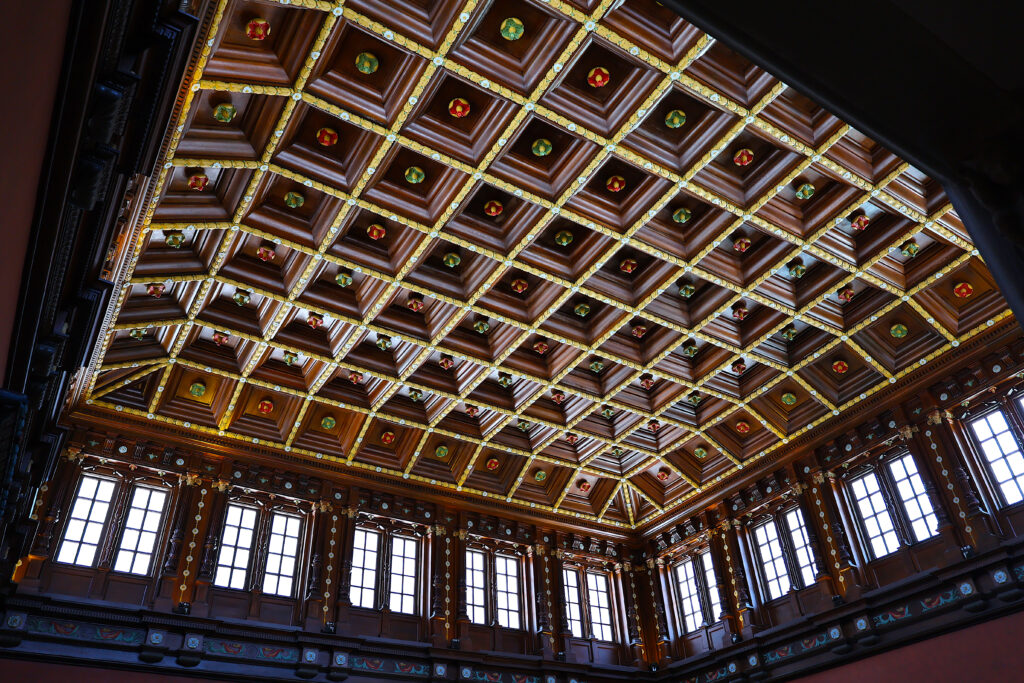
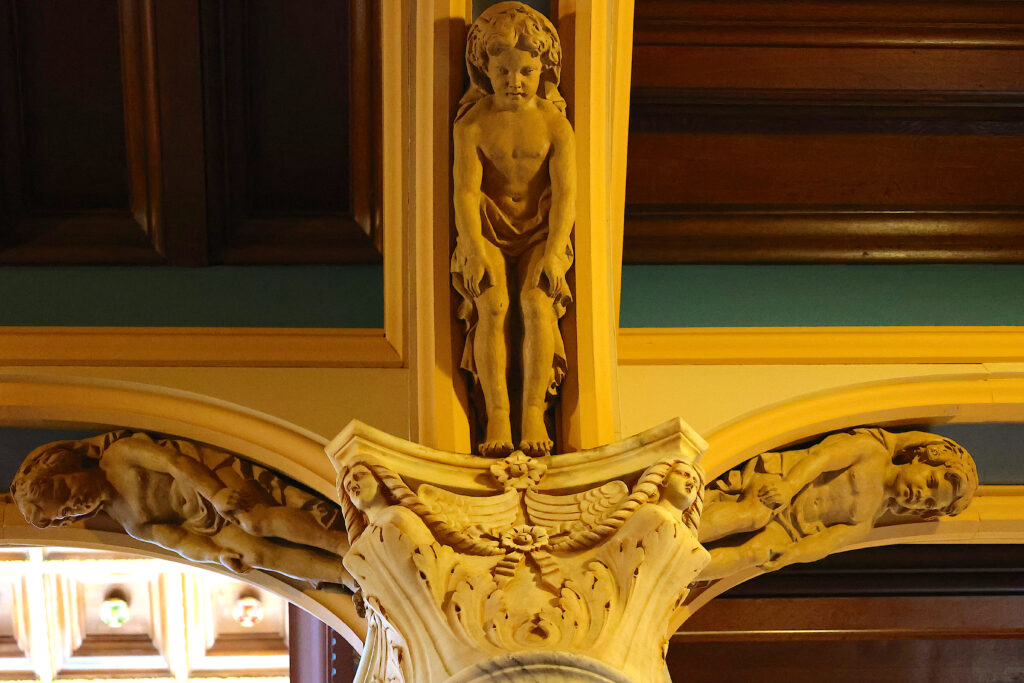
The new building opened in 1926 and was designed in a Spanish Renaissance style with an L shaped plan and elaborate cast stone Spanish Plateresque ornament. Its architectural design was intended to create a grand civic institution while also providing a practical environment for library users. The building’s scale, craftsmanship and historic character have helped make it one of Houston’s most recognizable historic public buildings.
The building was not originally called the Julia Ideson Building. It served as Houston’s Central Library for 50 years, from 1926 until 1976. Six years after Ideson’s death, Houston named the building in her honor in 1951. The name recognized the woman who had spent more than four decades developing Houston’s library system and helping establish its place as an important civic institution.
The building also represents an important chapter in Houston’s architectural history. Its Spanish inspired design was part of a broader vision for downtown Houston that envisioned a civic center of compatible public buildings. Although that larger plan was never fully realized, the Julia Ideson Building survived as a significant example of the architectural vision of its era.
For decades, the building served generations of Houstonians as the city’s main library. In 1976, a new Central Library opened across the plaza, and the Julia Ideson Building took on a new purpose. Following extensive restoration, it reopened in 1979 as the Houston Metropolitan Research Center, housing archives, manuscripts, Texas and local history materials and special collections.
That transition may have ultimately given the building an even more fitting role. Instead of simply being a place where people borrowed books, it became a place where Houston’s history itself could be preserved. Today, the building is home to the Houston History Research Center and serves as an important repository for materials documenting the city, its people, neighborhoods, architecture and institutions.

The building has also undergone significant preservation and restoration work. A new archival wing and outdoor reading garden were added in 2010, while restoration and renovation efforts helped preserve the historic portions of the structure. The Julia Ideson Building is now recognized as a historic landmark at the local, state and national levels.
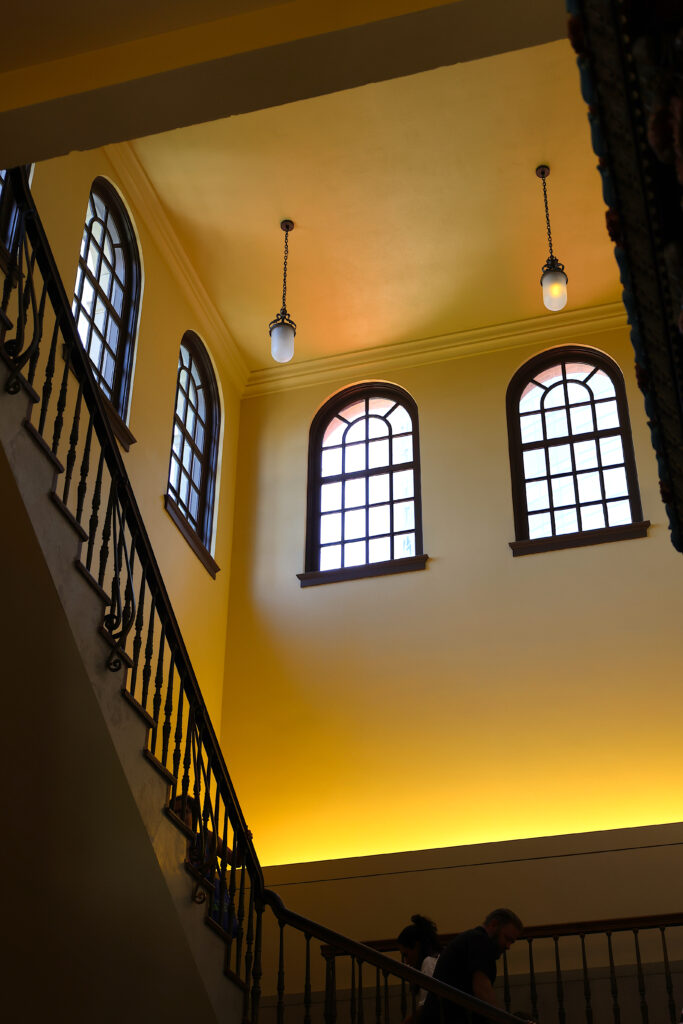
One of the most interesting aspects of the building’s history is that it has continued to evolve without losing its connection to the past. The architecture remains remarkably distinctive against the modern skyline surrounding it. Inside, historic details and restored spaces provide a glimpse into the building’s original era, while its current use ensures that it remains part of Houston’s cultural life.
That history was the focus of the 100th anniversary celebration I attended on Saturday.
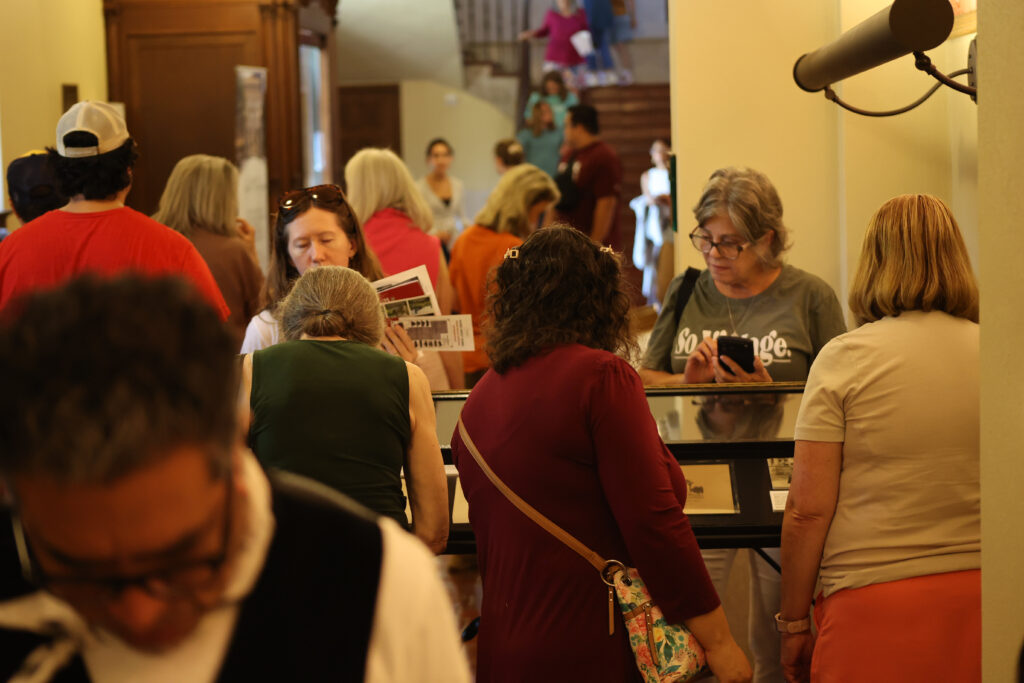
Houston Public Library marked the centennial with a free afternoon of activities designed to bring the building’s history to life. Rather than simply commemorating the anniversary with speeches and displays, the event gave visitors an opportunity to experience elements of the 1920s and explore the building itself.
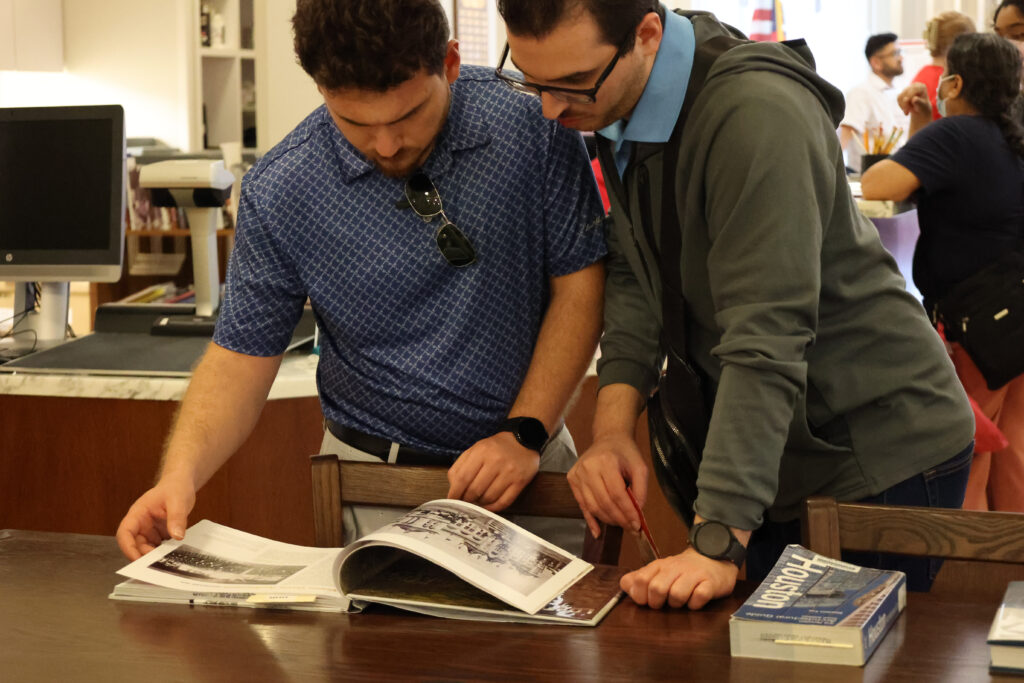
Guests could use authentic vintage typewriters, print postcards using a letterpress, make buttons, create paper dolls and participate in architecture inspired crafts. Vintage fashion displays offered a glimpse into the period when the building opened, while a themed photo opportunity gave visitors a chance to step into the spirit of the 1920s.
The celebration also featured exhibits dedicated to the building and its namesake, including displays highlighting the Julia Ideson Building’s history and Ideson’s life and career. Other exhibits explored 1920s fashion, Houston neighborhoods and the broader history preserved within Houston Public Library’s collections.
Historic building tours gave visitors an opportunity to see architectural details that can easily be missed during a normal visit. Tours were offered in English, as well as bilingual and Spanish language options, allowing more members of the community to experience the history of the building.
Families were also part of the celebration, with crafts, giveaways and a Vintage Storytime featuring selections from Houston Public Library’s historic children’s book collection. Community organizations representing preservation, architecture, history, genealogy and other areas of Houston’s cultural heritage also participated.
The program included a city proclamation and a special screening of The Julia Ideson Building: Celebrating 100 Years, providing another opportunity to reflect on the significance of the building and the woman behind its name. Houston Public Library’s official centennial event also highlighted the building’s history through exhibits, tours and hands on activities.
Attending the celebration made it clear that the centennial was about much more than celebrating the age of a historic building. It was an opportunity to recognize a century of Houston history and the people who helped shape the city.
Julia Ideson’s story is particularly remarkable because she was not simply a librarian who happened to have a historic building named after her. She was an important civic figure who helped build the foundation of Houston’s modern public library system.
She arrived in Houston as a child and eventually became one of the city’s most influential public servants. She helped expand access to books and information, supported library services for soldiers during wartime, advocated for library services for Black Houstonians during segregation and remained active in civic organizations throughout her career.







Her professional accomplishments extended beyond Houston as well. Ideson served as president of the Southwestern Library Association and held leadership positions in the Texas Library Association and American Library Association. In 1932, she became the first Houston woman included in Who’s Who in America.
When Ideson died in 1945, Houston had already been transformed by decades of growth, and the library system she helped build was vastly larger than the one she inherited. Her legacy continued after her death, eventually becoming permanently connected to the building that opened in 1926 and was named in her honor in 1951.
Today, the Julia Ideson Building serves as both a historic landmark and a working institution dedicated to preserving Houston’s past. Its collections contain the stories, photographs, documents, maps, architectural records and other materials that allow future generations to understand how Houston became the city it is today.
That is perhaps the most fitting legacy for Julia Ideson.
She spent her career building a library system that gave Houstonians access to knowledge. More than a century after she arrived in Houston, the building that bears her name continues that mission, while also protecting the history of the city she helped serve.
Houston is a city defined by change. Its skyline continues to grow, neighborhoods evolve and historic structures sometimes disappear. The Julia Ideson Building stands as a reminder that progress does not have to mean forgetting the past.
After 100 years, the building remains a living part of downtown Houston.
It has been a central library, a research center, an archive, an architectural landmark and a gathering place. It has witnessed generations of Houstonians walk through its doors and has survived enormous changes in the city around it.
The centennial celebration offered a chance to pause and appreciate that history.
For me, attending the event was a reminder that some of Houston’s most important stories are not always found in the newest buildings or the busiest parts of the skyline. Sometimes they are found in the places that have quietly remained standing for generations.
The Julia Ideson Building is one of those places.
Its 100th anniversary is ultimately a celebration of more than architecture. It is a celebration of Julia Ideson, the library system she helped build, the generations of Houstonians who have passed through its doors and the history that continues to be preserved inside.
A century after the building first opened, Julia Ideson’s name still represents something bigger than a landmark. It represents the idea that knowledge should be preserved, shared and made accessible to the community.
And for a city with as much history as Houston, that is a legacy worth protecting for another 100 years.
#HTXNews #Houston #HoustonTX #HTX #JuliaIdeson #JuliaIdesonBuilding #HoustonPublicLibrary #HoustonHistory #HoustonArchitecture #DowntownHouston #HoustonLandmarks #HoustonHeritage #TexasHistory #HoustonEvents #HistoricHouston #HoustonStories #HistoryMatters #PreserveHouston

Join The Discussion!
Comments